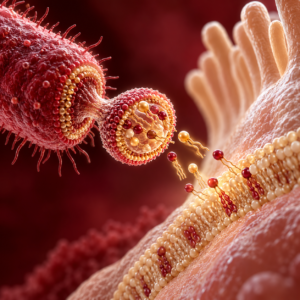
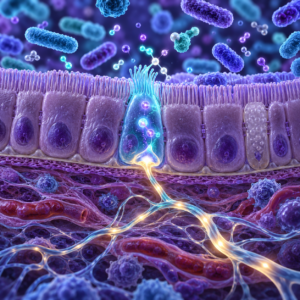
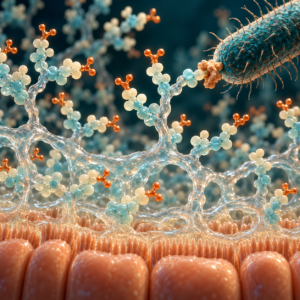
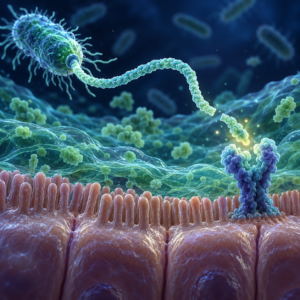
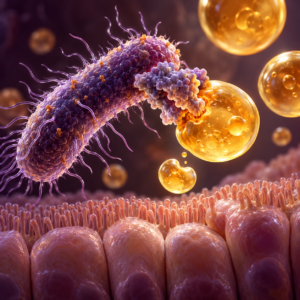
Dietary fat does not pass through the gut unchanged. Enzymes from human cells and microbes can alter the shape of a fat molecule before the body absorbs or stores it. One bacterial reaction is especially useful for understanding this process. Certain bacteria add part of a water molecule to an unsaturated fat. This creates a hydroxy-fatty acid. The chemical edit is small, but it can change how human cells recognize and process the molecule.
Two related compounds appear often in this research. HYA is made from linoleic acid and keeps one carbon-carbon double bond. Its full name is 10-hydroxy-cis-12-octadecenoic acid. 10-HSA, or 10-hydroxystearic acid, is a saturated compound linked with the processing of oleic acid. HYA and 10-HSA belong to the same broad family, but they are not the same signal. Their shapes allow them to act through different pathways in human cells.
In Lactobacillus plantarum, an enzyme called a hydratase begins the conversion of linoleic acid into HYA. Experiments with the purified enzyme showed which fats it could use and the conditions in which it worked best. This evidence goes beyond finding a bacterium and a molecule in the same sample. It shows a direct route by which a common dietary fat can become a different signal before human cells encounter it. (Takeuchi et al., 2015)
The basic sequence is straightforward. An unsaturated dietary fat reaches a bacterium that carries the right enzyme. The bacterium adds a hydroxyl group, made of oxygen and hydrogen, and creates HYA or a related product. Human cells then meet a molecule with a new shape. The result in a person will depend on several factors. These include how much fat reaches the bacteria, which strains and enzymes are present, how much metabolite is made, and whether the intestinal barrier is healthy or damaged.
The full analysis in The Weekly Biome examines how these bacterial edits change the signals that intestinal cells receive, why HYA and 10-HSA must be distinguished, and why the strongest mechanistic evidence remains preclinical.