Sphingolipids are fats with several jobs. They help build cell membranes and take part in signals that control inflammation, cell survival, and metabolism. Ceramides, one well-known group, are often studied in insulin resistance and fatty liver disease. Yet the human body is not their only source.
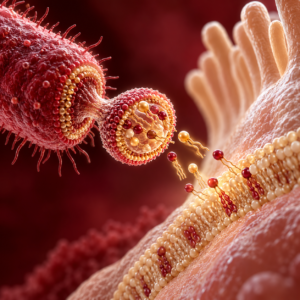
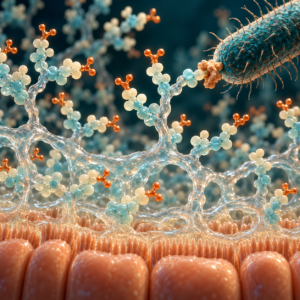
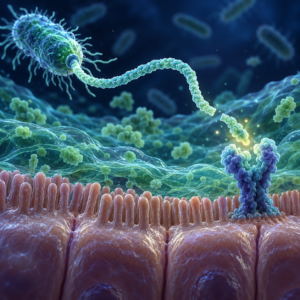
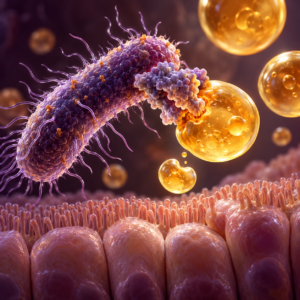
Several common gut bacteria make their own sphingolipids. Bacteroides species are major producers, and some strains of Prevotella can make related molecules. These lipids help form bacterial membranes, but their role does not end there. Experiments show that selected bacterial lipids can enter host tissues, be reshaped by mammalian cells, and influence immune or metabolic responses. The important word is selected: not every bacterial lipid follows the same route or produces the same effect.
Sphingolipid is the name of a large family, not one molecule. Small differences in structure can change where a lipid travels and which proteins recognize it. For that reason, an increase in one bacterial lipid cannot be treated as equivalent to an increase in a human ceramide associated with metabolic disease.
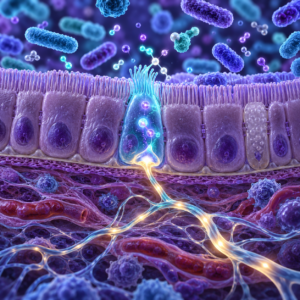
Researchers tested this transfer using two versions of Bacteroides thetaiotaomicron: one that could make sphingolipids and one that could not. The comparison isolated the effect of the bacterial lipid pathway. In cultured human cells, bacterial sphingolipids entered the host’s lipid-processing system. In mice, they appeared in intestinal tissue and blood traveling toward the liver. They also changed the host’s own sphingolipid production and liver ceramide levels (Johnson et al., 2020).
The full analysis in The Weekly Biome examines how bacterial sphingolipids reach host tissues, how selected lipids affect immune and metabolic pathways, and why their source, structure, and route of transfer matter.