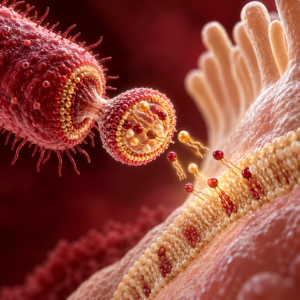
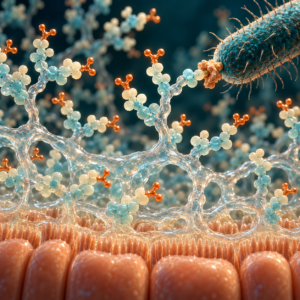
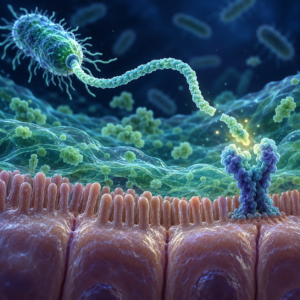
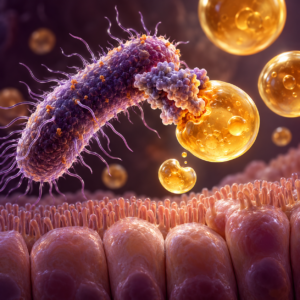
PFAS are called forever chemicals because their fluorinated carbon structures resist many of the chemical reactions that normally break environmental compounds down. Bacteria do not simply coexist with these chemicals, however. Evidence now shows that microbial cells can capture PFAS on their surfaces, concentrate certain PFAS inside themselves, alter their membranes after exposure, and in specific cases incorporate PFAS-derived molecules directly into membrane lipids.
The ability to accumulate PFAS varies substantially between bacteria and between individual PFAS compounds. In a screen of 89 human gut bacterial strains, 38 accumulated substantial amounts of PFAS. Bacteroides uniformis captured approximately half of the available perfluorononanoic acid, or PFNA, within minutes and retained it for seven days without detectable release. Imaging experiments in Escherichia coli confirmed that fluorinated material could accumulate inside bacterial cells rather than remaining only on the surface.
The interaction can go further than storage. Experiments with Pseudomonas strain 273 showed that certain fluorotelomer carboxylic acids can enter normal lipid-building pathways. Their fluorinated chains became chemically attached to phospholipids, the molecules bacteria use to construct their cell membranes. Approximately 7 to 12 percent of membrane phospholipids contained these polyfluorinated chains under the experimental conditions. This process has not been demonstrated for every PFAS, and common terminal compounds such as PFOA and PFOS should not be assumed to behave the same way.
The full analysis in The Weekly Biome examines how bacteria capture PFAS, what determines whether the chemicals remain outside or enter the cell, how PFAS affect bacterial membranes, and why incorporation into a living membrane is not the same as destroying a forever chemical.