
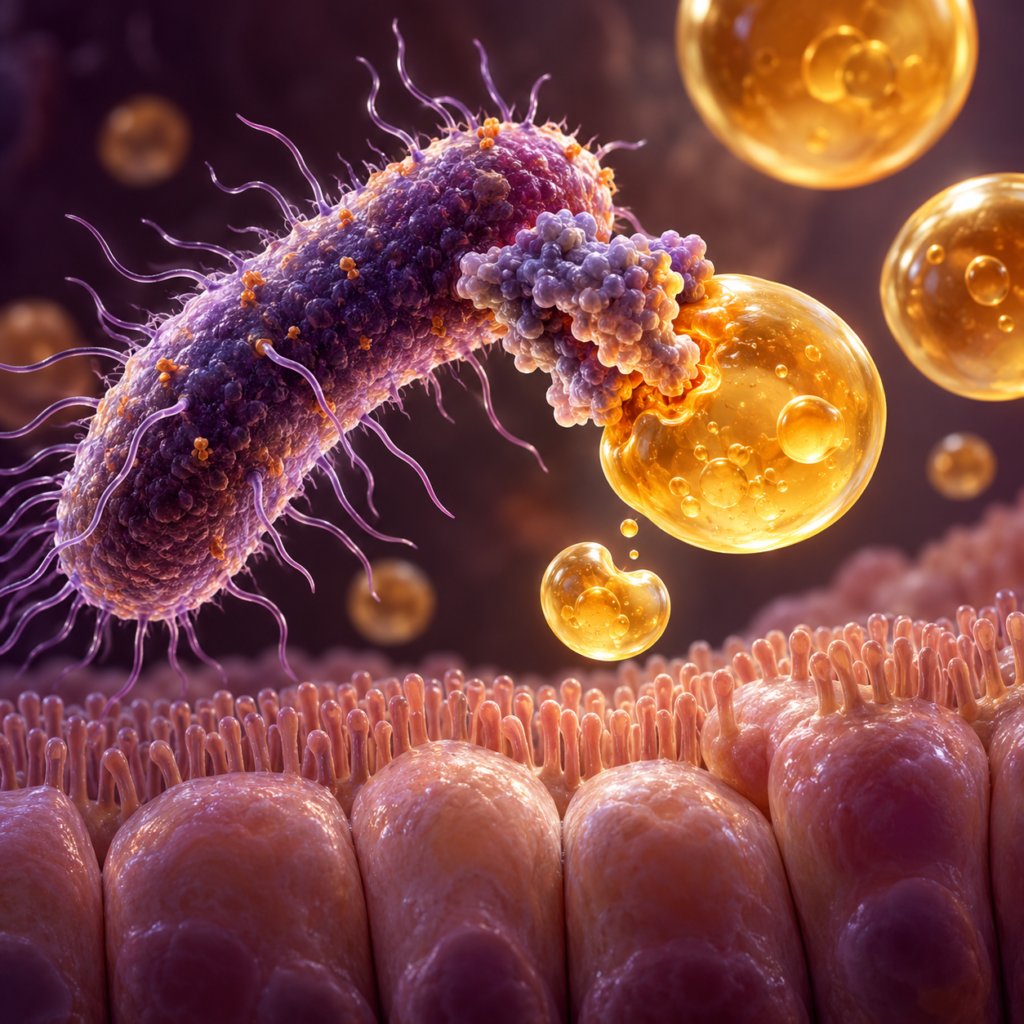
When Gut Bacteria Rewrite Dietary Fat
Dietary fat does not pass through the gut unchanged. Enzymes from human cells and microbes can alter the shape of a fat molecule before the body absorbs or stores it. One bacterial reaction is especially
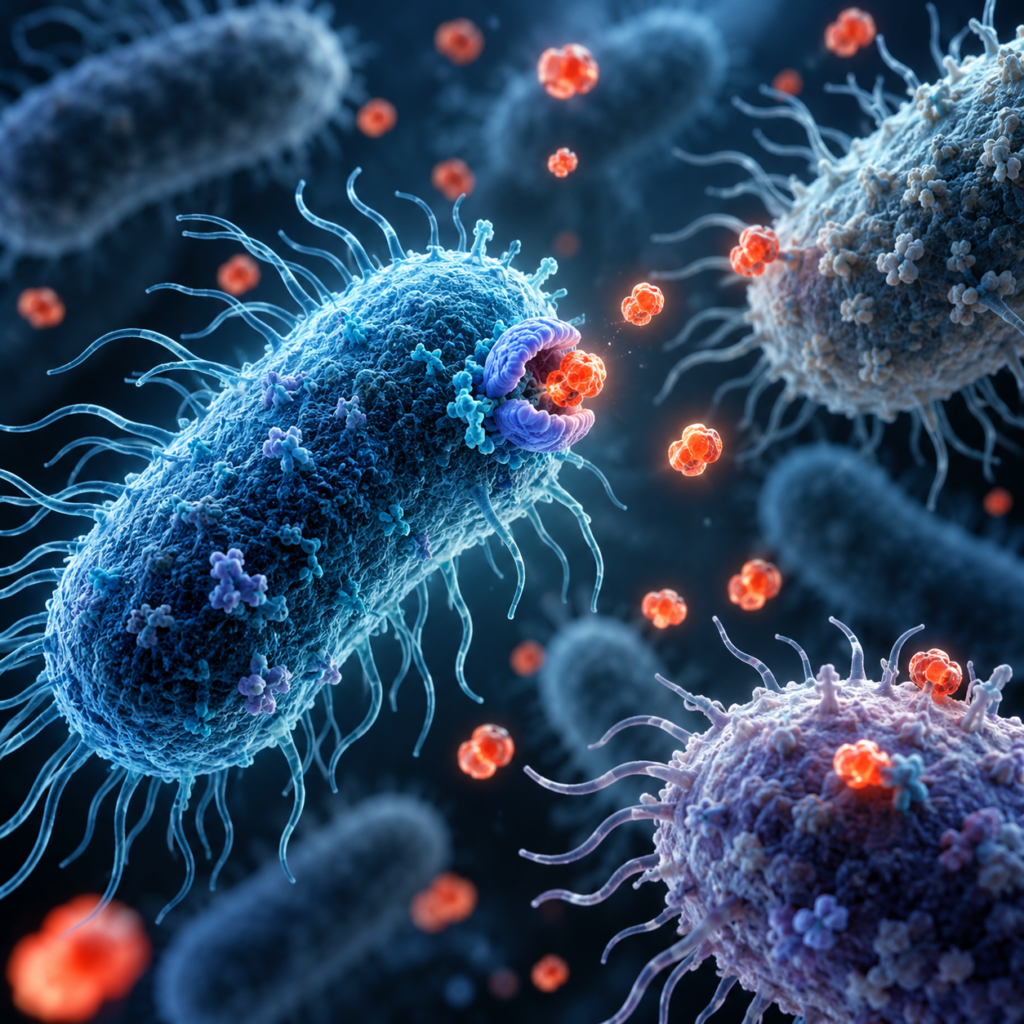
Vitamin B12 Is Also a Microbial Resource
Vitamin B12 is usually described as a human nutrient. It supports DNA production, red blood cell formation, and the nervous system. A deficiency needs proper diagnosis and treatment. Bacteria in the colon also need B12
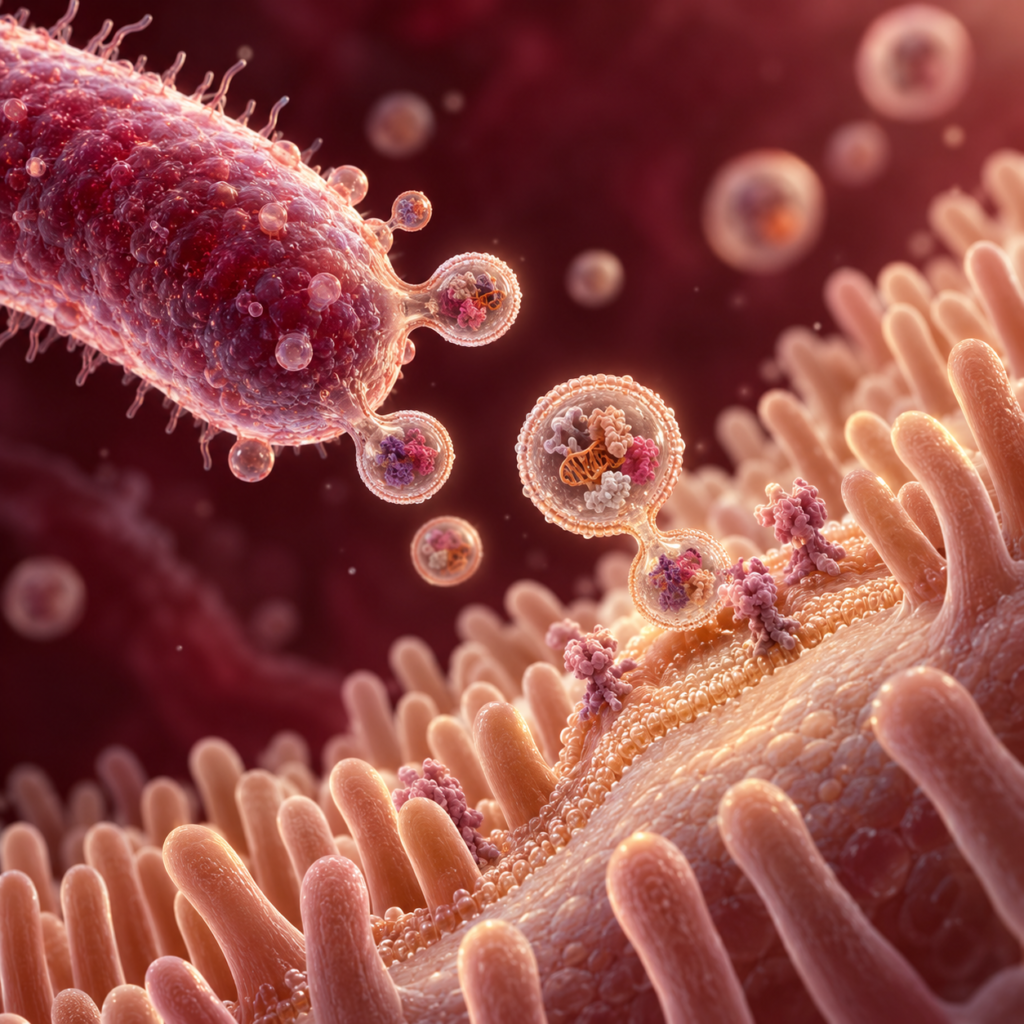
How Probiotic Bacteria Send Tiny Packages to Gut Cells
A bacterium does not need to stay in the intestine, or even remain intact, to leave a biological signal behind. Many bacteria release tiny bubbles made from their outer covering. Scientists call these particles extracellular
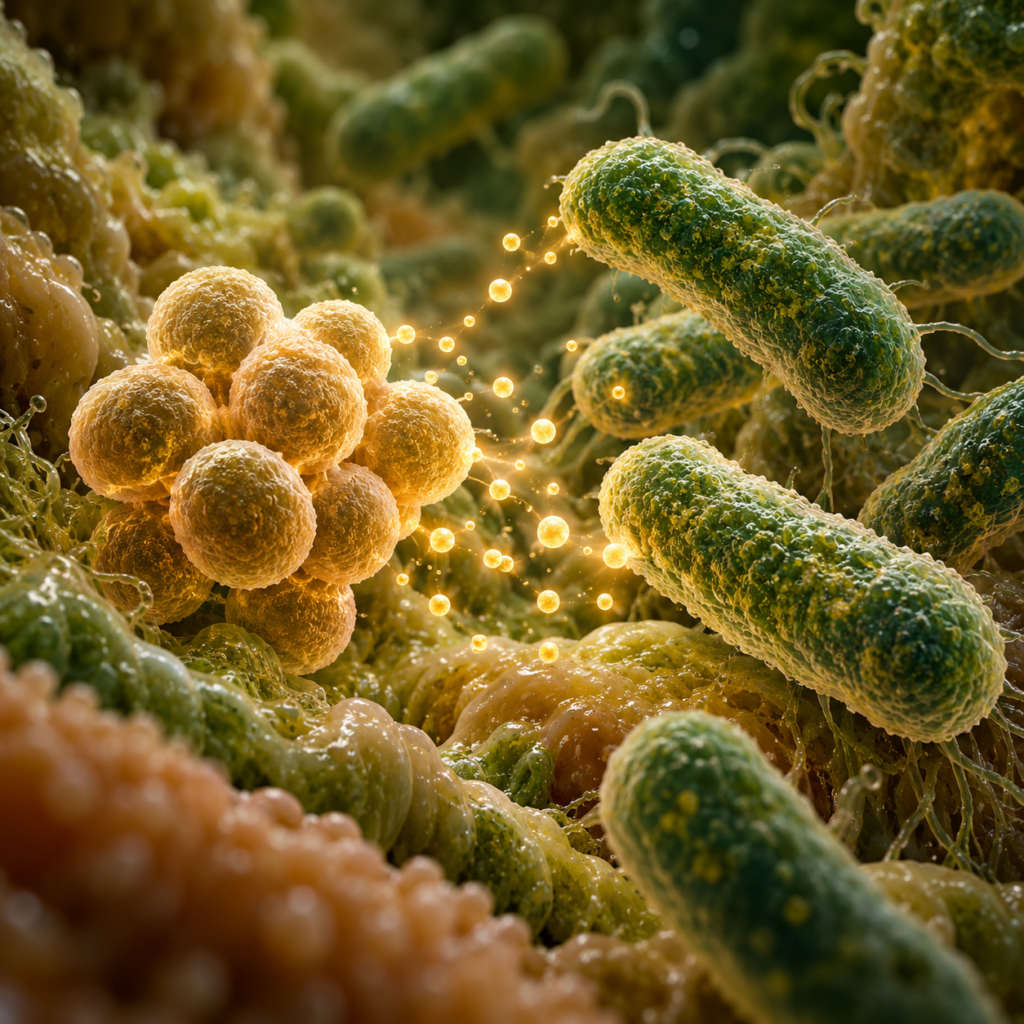
How Methane-Making Microbes Change Gut Fermentation
Methane is easy to notice because it can be measured in breath. But methane appears at the end of a longer microbial exchange. It begins when gut bacteria ferment carbohydrates and release hydrogen as a
