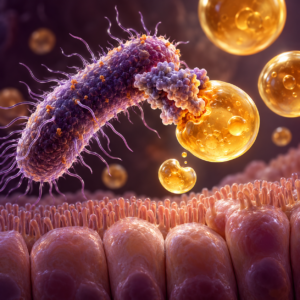
How Your Bacteria Affect Your Heart
Most people think of the heart and the stomach as two completely different systems. However, a major study published in the journal Genes & Diseases has shown that the tiny organisms living in your gut play a massive role in whether or not you develop heart failure. Using advanced genetic testing, researchers have pinpointed exactly which bacteria are helping your heart and which ones are putting it at risk. Here is a simple breakdown of the study and what it means for health.
The Heart-Gut Highway
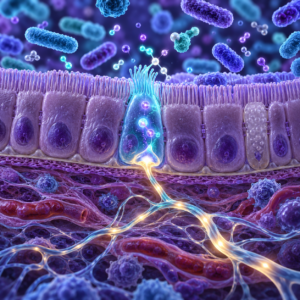
Your gut and your heart are constantly communicating through a pathway called the Heart-Gut Axis. Your gut bacteria release chemicals into your bloodstream; some act like “shielding” for your heart, while others act like “irritants” that can cause your heart to weaken over time. Researchers found a direct cause-and-effect link showing that heart failure is not just about what you eat, but how the bacteria in your gut process that food.
The Heart Stressors (The Risk Factors)
The study identified 6 specific groups of bacteria that increase the risk of heart failure. One major culprit is a group called Victivallis. When these bacteria become too numerous, they can trigger inflammation throughout the body. This constant stress—similar to a “slow burn”—wears down the heart muscle over time, making it harder to pump blood effectively.
The Heart Protectors (The Heroes)
On the positive side, the study found 5 groups of bacteria that actively protect the heart. Groups like Coprococcus 2 and Butyrivibrio are the stars here. These helpful bacteria produce special molecules called Short-Chain Fatty Acids. These molecules act like high-quality fuel and repair kits for your cardiovascular system, helping to lower blood pressure and keep the lining of your blood vessels smooth and healthy.
| Category | Bacterial Group (Taxa) | Role in Heart Health |
| Risk Factors (Higher levels linked to heart failure) | Victivallis | Linked strongly to increased risk of heart muscle weakness. |
| Marvinbryantia | Associated with higher levels of internal inflammation. | |
| Turicibacter | Often found in higher amounts when heart health is declining. | |
| Protective Factors (Higher levels linked to a stronger heart) | Coprococcus 2 | Produces “good fats” that help lower heart stress. |
| Butyrivibrio | Helps maintain a healthy gut lining to keep heart irritants out. | |
| Ruminococcus 1 | Known for breaking down fiber into heart-healthy chemicals. |
Why This Science Matters
While doctors have long focused on cholesterol and blood pressure, this research proves that the microbiome is a major piece of the puzzle. The study shows that having the right balance of bacteria can actually prevent the heart from becoming damaged in the first place.
This is a two-way street as well: when the heart is weak, it sends less oxygen to the gut. This causes “good” bacteria to die off and allows “bad” bacteria to grow, creating a downward spiral that can make heart failure worse over time.
The Bottom Line
Taking care of your gut is a secret weapon for a stronger heart.
Source: Luo, Z., Lu, J., & Wu, C. (2025). Decoding the impact of gut microbiota on heart failure: A Mendelian randomization study. Genes & Diseases, 12 (5), 101344. https://doi.org/10.1016/j.gendis.2024.101344