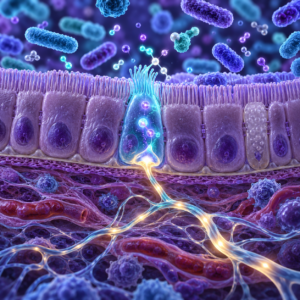
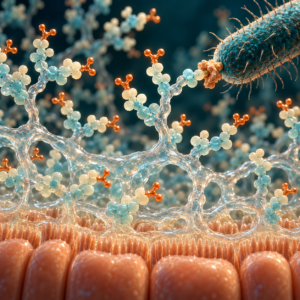
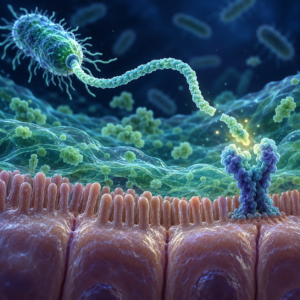
The connection between the gut microbiome and Alzheimer’s disease is often discussed in terms of changes in bacterial composition. A more specific question is now emerging: whether molecules produced by gut bacteria can enter circulation and influence biological processes involved in the disease. One of those molecules is imidazole propionate, or ImP, a microbial metabolite produced from the amino acid histidine.
A 2026 study examined plasma ImP in 1,196 cognitively unimpaired adults. Higher concentrations were associated with lower scores on measures designed to detect subtle cognitive changes before clinical dementia develops. The finding does not establish that ImP causes Alzheimer’s disease, but it moves the discussion beyond simply asking which bacteria are present. It points toward microbial metabolism as a possible connection between the intestinal ecosystem and the brain.
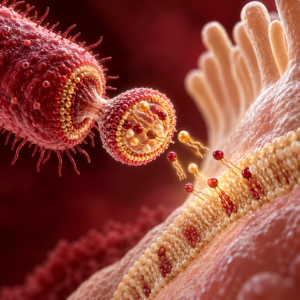
Experimental work strengthened that possibility. In a mouse model genetically predisposed to Alzheimer’s-like pathology, exposure to ImP was associated with a greater amyloid-beta plaque burden. The experiments also indicated that the metabolite can move beyond the intestine and interact with processes involving the brain and its protective barriers. Human association and animal mechanism therefore point in the same direction, but they are not equivalent evidence of causation.
ImP production also appears to depend on more than histidine intake alone. Diet, microbial composition, and the metabolic capacity of the gut ecosystem can influence how much of the compound is produced.
The full analysis in The Weekly Biome examines how gut bacteria produce imidazole propionate, what the human Alzheimer’s data actually establish, what the experimental models add, and why a microbial metabolite may provide a more useful mechanistic link between the gut microbiome and Alzheimer’s disease than bacterial composition alone.